

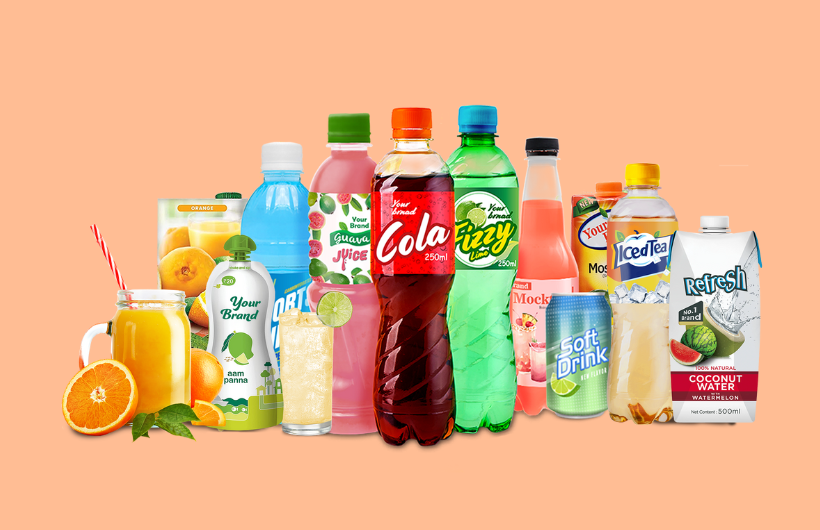
India’s beverage industry continues to attract founders, FMCG veterans, and new-age entrepreneurs alike. From energy drinks and protein water to herbal, functional, and low-calorie beverages, the opportunity landscape is expansive. However, while demand-side momentum is strong, launching a beverage brand in India is far more complex than finalizing a flavour and a label.
Behind every successful launch lies a disciplined journey through beverage product development, beverages lab trials, pilot-scale validation, and manufacturing readiness. Brands that underestimate this process often struggle to scale sustainably despite strong market interest.
From Idea to Product: Beverage Development Is the First Real Test
Most beverage brands begin with a strong concept often driven by trends such as functional beverages development, sugar-free beverages, hydration beverages, or protein drinks. However, the real challenge begins when ideas must be converted into manufacturable products.
Beverage formulation steps involve far more than taste optimization. Ingredient compatibility, nutritional stability, shelf-life performance, and regulatory compliance must all be addressed early. This is where professional beverage product development companies create a significant advantage by translating concepts into production-ready formulations.
For categories such as ginger ale drinks development, herbal base drink development, iced tea drinks product development services, protein water product development, and whey protein drink product development, formulation precision directly impacts scalability and cost efficiency.
Why Beverages Lab Trials and Pilot Scale Validation Matter
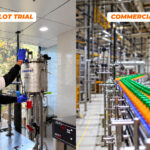
One of the most critical and often overlooked phases in beverage launches is lab and pilot validation. Bench-scale success does not guarantee commercial viability.
Beverage’s lab trials, pilot scale lab trials services, and pilot-scale validation help brands:
- Identify formulation risks early
- Validate processing parameters
- Test shelf-life under controlled conditions
- Optimize yield and cost before scale-up
For categories such as energy drink lab trials, protein drinks lab trials, flavoured water lab trials, tonic water lab trials, vitamin water lab trials, and hydration beverages lab trials, this phase determines whether a product can survive real-world manufacturing and distribution conditions.
Skipping pilot trials often results in reformulation delays, quality inconsistencies, or failures during commercial production.
Co-Packing and Contract Manufacturing: Choosing the Right Path
As brands move closer to market, the question of manufacturing becomes central. Many emerging brands rely on beverage co-packers in India or beverage contract manufacturing to avoid heavy capital investment.
However, not all co-packers are equipped to handle innovation-led products. Selecting the right partner for co-packing manufacturing, beverages co packing, bottling co-packers, or beverage product manufacturing requires alignment on:
- Process capability
- Quality systems
- Category expertise
- Scale flexibility
This becomes especially important for products like protein water, whey protein drinks, electrolyte drinks, sports drinks, iced tea, tonic water, and functional beverages, where process control directly impacts product stability and brand reputation.
Manufacturing Realities in the Indian Market
India presents unique operational challenges. Ambient storage, variable cold-chain infrastructure, and long distribution cycles place immense pressure on beverage stability.
Manufacturers and co-packers must be capable of supporting:
- Hydration beverages manufacturing
- Sports drinks manufacturing
- Herbal drink manufacturing
- Energy drink manufacturing
- Iced tea manufacturing and co packing
At this stage, brands that have already invested in beverage development, lab trials, and pilot-scale validation are far better positioned to scale smoothly with minimal risk.
Speed vs. Sustainability: A Strategic Decision
In a competitive market, speed-to-launch is tempting. However, sustainable brands prioritize execution quality over speed. Rushing into co-packing or beverage manufacturing without adequate validation often leads to higher long-term costs, reformulation cycles, and operational inefficiencies.
Successful beverage brands take a structured approach:
- Product development before production
- Lab trials before scale-up
- Manufacturing feasibility before commercialization
This discipline is what separates short-lived launches from scalable, defensible brands.
The Role of an Integrated Development Ecosystem
Today’s most successful beverage launches are rarely built in isolation. They are supported by integrated ecosystems offering:
- Beverage product development services
- Pilot-scale lab trials
- Manufacturing and co-packing readiness
Such ecosystems act as strategic enablers reducing risk, improving launch confidence, and ensuring that products are designed for scale from day one.
Launching a beverage brand in India requires far more than market enthusiasm and creative branding. It demands a deep understanding of beverage development, lab trials, pilot-scale validation, co-packing strategy, and manufacturing execution.
In an industry where margins are tight and competition is relentless, brands that invest early in process discipline, validation, and the right partnerships gain a decisive advantage not just at launch, but throughout their growth journey.