
India’s beverage market continues to grow at a rapid pace, driven by increasing demand for functional drinks, clean-label formulations, low-sugar alternatives, and plant-based beverages. While the opportunity is significant, the path from concept to commercial success is complex. Many beverage startups struggle not because of weak ideas, but due to avoidable strategic and execution-level mistakes during product development, processing, and scale-up.
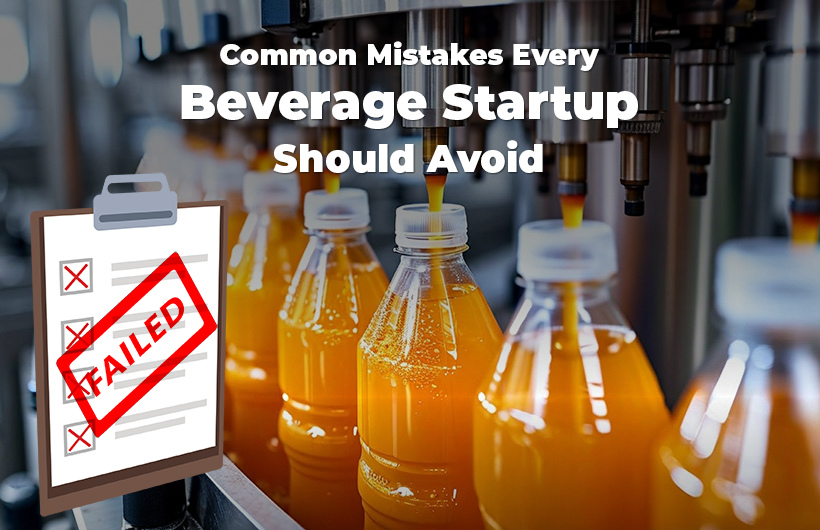
One of the most frequent mistakes is developing products without considering commercial processing realities. Beverage formulations that perform well at bench or kitchen scale often behave very differently when exposed to industrial processes such as homogenisation, pasteurisation, UHT treatment, or extended cold-chain distribution. When process compatibility is not evaluated early, startups face issues like flavour degradation, phase separation, viscosity changes, or inconsistent batches post-launch. These challenges typically surface only after market entry, making corrections costly and disruptive.
Another critical error lies in underestimating shelf-life and stability requirements. Natural beverages, especially those with reduced preservatives, functional ingredients, or plant-based components, are highly sensitive to microbial growth, temperature fluctuations, and ingredient interactions. Without structured shelf-life studies and accelerated stability testing, startups risk premature spoilage, shortened distribution windows, and limited market expansion. This not only impacts revenue but also brand credibility and consumer trust.
Many startups also attempt to scale production too quickly, bypassing pilot-scale validation. Scaling directly from lab trials to commercial production often results in formulation failures, yield losses, and repeated process modifications. Pilot trials act as a bridge between concept and commercialisation, allowing brands to validate processing parameters, ingredient behaviour, and equipment compatibility before committing to full-scale manufacturing investments.
Operational and strategic gaps further compound these challenges. Commonly observed issues include:
- Late-stage regulatory and labelling alignment, leading to reformulation or compliance delays
- Inappropriate equipment selection, which impacts product quality, efficiency, and hygiene
- Packaging choices driven by aesthetics rather than product protection and shelf-life performance
- Each of these decisions influences long-term scalability and cost efficiency.
Another overlooked area is the lack of an integrated product development approach. Treating formulation, processing, packaging, and compliance as isolated steps leads to fragmented decision-making. Successful beverage brands adopt a holistic development model where formulation design, processing technology, shelf-life planning, and regulatory strategy are aligned from the outset.
For beverage startups, avoiding these mistakes is less about slowing down innovation and more about building a structured, validation-driven development pathway. Brands that invest early in process understanding, pilot trials, stability testing, and compliance planning are better positioned to scale confidently, maintain consistent quality, and sustain long-term growth in an increasingly competitive market.