
In today’s highly competitive beverage landscape, product success depends on far more than a compelling concept or strong branding. From stability and taste to scalability and processing performance, every formulation must be validated under real manufacturing conditions. This is where pilot trials in beverage development become a decisive step before commercial production.
Pilot trials bridge the gap between laboratory formulations and full-scale manufacturing. They allow beverage brands to assess how a formulation behaves when exposed to actual processing parameters such as heat treatment, mixing intensity, carbonation, and filling conditions. For startups and established brands alike, pilot testing significantly reduces the risk of costly failures during scale-up.
Why Pilot Trials Matter in Beverage Product Development
Pilot-scale testing provides critical insights that cannot be achieved through bench trials alone. It helps brands validate formulation stability, ingredient interaction, and process compatibility before engaging in beverage contract manufacturing or Beverages co-packing.
This stage is particularly important for products such as Ginger ale drinks, Iced tea, protein water, sports drinks, and herbal beverages, where minor formulation changes can impact clarity, mouthfeel, flavour balance, or shelf stability. Pilot trials ensure that the beverage performs consistently across production batches and remains aligned with market expectations.
Additionally, pilot trials allow brands to fine-tune formulations for sugar-free or low-calorie beverages, ensuring that sweetness systems, acids, and flavour compounds remain stable during processing and storage.
What Happens During a Pilot Trial?
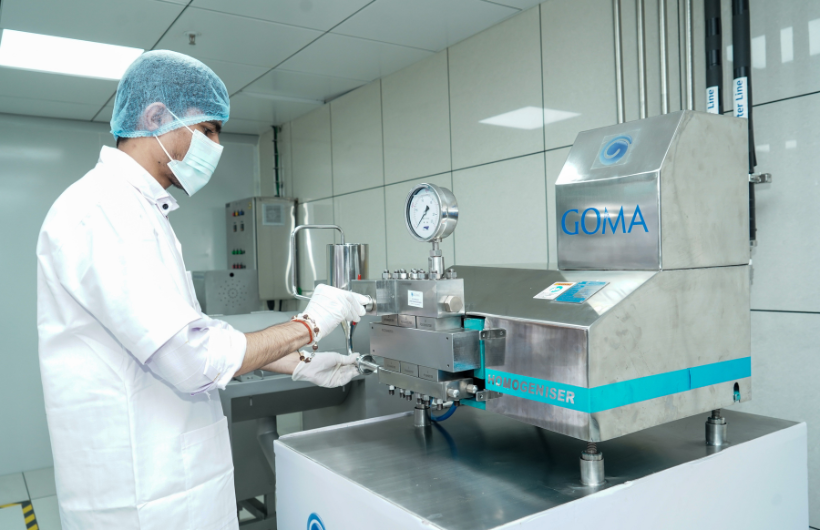
A typical pilot trial simulates commercial-scale conditions while maintaining flexibility for adjustments. The process generally includes scaling the formulation from lab to pilot volume, followed by process simulations such as pasteurization, carbonation, homogenization, or thermal treatment.
Stability evaluation is a core focus area. Beverages are assessed for separation, sedimentation, colour retention, and flavour consistency over time. Packaging compatibility is also tested to ensure the product performs well in PET bottles, cans, or glass formats.
For brands working on hydration beverages, electrolyte drinks, or protein-based beverages, pilot trials help identify potential processing challenges early, allowing corrective action before full-scale manufacturing.
Reducing Commercial Risk Before Scale-Up
One of the biggest advantages of pilot trials is cost control. Entering large-scale production without pilot validation can lead to batch rejections, reformulation delays, or co-packer incompatibility. Pilot testing ensures the beverage is technically feasible, commercially scalable, and aligned with the requirements of beverage co-packers in India.
By validating the product before scale-up, brands gain confidence in both formulation and process, enabling smoother collaboration with manufacturing partners and faster time-to-market.
Pilot trials are not an optional step in beverage innovation they are a strategic necessity. Whether developing functional beverages, protein drinks, herbal formulations, or ready-to-drink refreshments, pilot testing lays the foundation for consistent quality and long-term success.
For any brand serious about beverage product development, pilot trials ensure that what works in the lab also works on the production floor and ultimately, in the hands of consumers.