


Launching a new beverage is far more complex than developing a great-tasting recipe. Consumers today expect beverages that deliver exceptional taste, consistent quality, nutritional value, attractive packaging, regulatory compliance, and a competitive price all at the same time. Meeting these expectations requires careful planning, technical expertise, and a structured beverage product development process.
Whether you’re introducing a functional drink, fruit beverage, iced tea, dairy beverage, or plant-based alternative, several challenges can arise between the initial concept and commercial production. Understanding these obstacles early helps brands reduce development time, minimize costs, and improve the chances of a successful product launch.
1. Achieving the Right Taste Profile
Taste remains the single most important factor influencing repeat purchases. Even a beverage with excellent health benefits is unlikely to succeed if consumers do not enjoy drinking it.
Common challenges include:
• Balancing sweetness, acidity, and flavour intensity
• Eliminating undesirable aftertastes
• Maintaining flavour consistency across batches
• Appealing to different consumer preferences
Multiple formulation trials and sensory evaluations are often required before arriving at the ideal taste profile.
2. Maintaining Product Stability
A beverage should look, taste, and perform the same throughout its intended shelf life.
Manufacturers frequently encounter issues such as:
• Ingredient separation
• Sedimentation
• Colour changes
• Flavour degradation
• Texture inconsistencies
Selecting compatible ingredients and validating processing parameters are essential to achieving long-term product stability.
3. Selecting the Right Ingredients
Consumers increasingly prefer products with clean labels, natural ingredients, and recognizable components. However, replacing conventional ingredients with natural alternatives often introduces new formulation challenges.
Some common concerns include:
• Ingredient compatibility
• Solubility issues
• Natural flavour interactions
• Cost implications
• Raw material availability
Finding the right balance between functionality, taste, and affordability requires extensive testing.
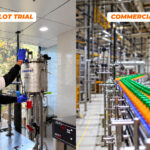
4. Scaling Up from Lab to Commercial Production
A formulation that performs well in a laboratory does not always deliver identical results during commercial manufacturing.
Common scale-up challenges include:
• Variations in mixing efficiency
• Differences in heating and cooling rates
• Equipment limitations
• Changes in product texture and mouthfeel
• Batch-to-batch consistency
Pilot-scale validation helps identify and resolve these issues before full-scale production begins.
5. Meeting Shelf-Life Requirements
Retailers and distributors often require products with extended shelf life while maintaining quality and safety.
Manufacturers must carefully evaluate:
• Processing methods
• Packaging compatibility
• Microbial stability
• Storage conditions
• Distribution environments
Shelf-life testing plays a critical role in validating product performance under real-world conditions.
6. Regulatory Compliance
Every beverage introduced into the market must comply with applicable food safety and labelling regulations.
Key considerations include:
• Ingredient approvals
• Nutritional declarations
• Allergen information
• Label compliance
• Food safety standards
Addressing regulatory requirements early in development helps prevent costly delays during commercialization.
7. Packaging Compatibility
Packaging influences not only product appearance but also its quality, shelf life, and consumer experience.
Challenges often include:
• Product interaction with packaging materials
• Oxygen and light sensitivity
• Filling process compatibility
• Seal integrity
• Transportation durability
Testing the product in its final packaging format is an essential part of beverage development.
8. Balancing Innovation with Manufacturing Feasibility
Many innovative beverage concepts involve unique ingredients or complex formulations that can be difficult to manufacture consistently.
Development teams must evaluate:
• Production efficiency
• Equipment compatibility
• Manufacturing costs
• Process repeatability
• Commercial scalability
A technically feasible product is more likely to achieve long-term market success.
9. Managing Development Timelines
Speed-to-market has become a major competitive advantage. However, rushing product development can lead to formulation issues, stability failures, or quality inconsistencies.
A structured development process helps minimize delays by incorporating:
• Clear project planning
• Defined testing stages
• Pilot-scale validation
• Cross-functional collaboration
• Continuous quality evaluation
10. Understanding Consumer Expectations
Consumer preferences evolve rapidly, influenced by health trends, lifestyle changes, and regional tastes. A technically sound beverage may still struggle if it does not align with market demand.
Successful product development requires understanding factors such as:
• Preferred flavour profiles
• Sugar reduction trends
• Functional ingredients
• Premium positioning
• Convenience and packaging preferences
Consumer insights should guide formulation decisions throughout the development process.
Best Practices for Successful Beverage Product Development
Companies can significantly improve development outcomes by following a structured approach:
• Begin with a clear understanding of the target consumer.
• Validate formulations through multiple laboratory trials.
• Conduct sensory evaluations with representative consumer groups.
• Perform stability and shelf-life testing under expected storage conditions.
• Validate processing parameters using pilot-scale production.
• Ensure packaging compatibility before commercialization.
• Address regulatory requirements early in the development cycle.
• Optimize formulations for consistent commercial manufacturing.
Beverage product development is a multidisciplinary process that combines food science, engineering, consumer research, quality assurance, and manufacturing expertise. While challenges such as formulation stability, ingredient selection, scale-up, packaging, and regulatory compliance are common, they can be effectively managed through systematic development and rigorous validation.
Brands that invest in thorough testing, pilot-scale evaluation, and consumer-focused innovation are better positioned to launch beverages that consistently meet market expectations while ensuring quality, safety, and commercial success.